For most of us, ammonia is invisible in daily life, yet it quietly underpins the global food chain. Each year, more than 200 million tonnes of ammonia are produced, almost entirely for fertilisers. (S&P, 2025)
That picture is set to change. By 2040, demand could rise to 350 million tonnes, with nearly a third diverted to energy applications, powering ships (10%), generating electricity (5%), and transporting hydrogen safely (12%). By 2050, ammonia use could double more than today’s levels, with over half tied to energy. (S&P, 2025)
A molecule once known for feeding the world may soon also help decarbonise the hardest-to-abate sectors, such as maritime.
Why Ammonia Matters
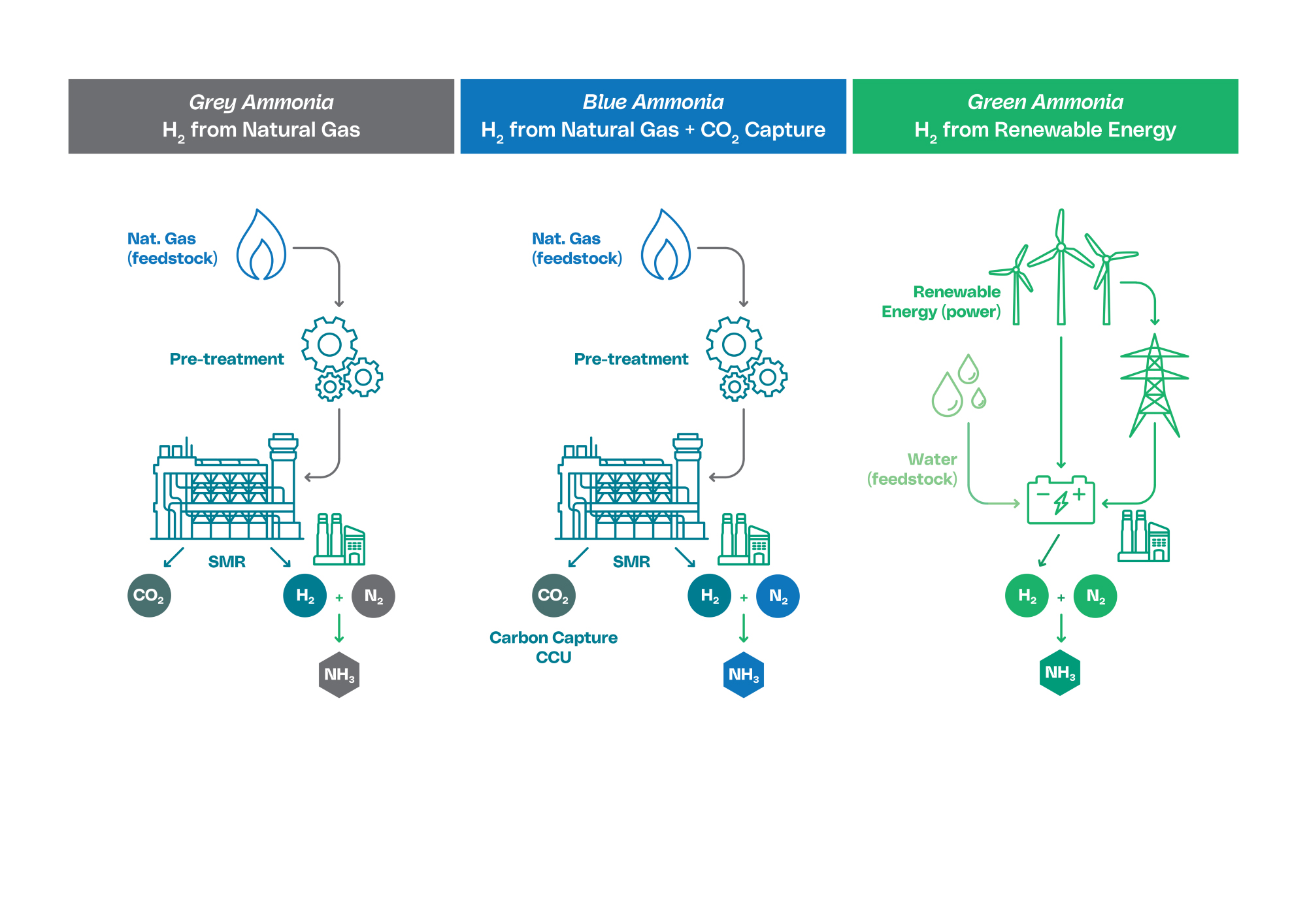
Ammonia is a hydrogen-rich molecule that contains no carbon. When produced cleanly, it can fuel ships without emitting carbon dioxide, a breakthrough in the maritime decarbonisation pathway.
-
Green ammonia is made with renewable hydrogen via electrolysis.
-
Blue ammonia comes from natural gas, with emissions captured and stored.
-
Grey ammonia is produced without abatement and carries a high carbon footprint.
“Our industry has long depended on conventional fossil oil-based fuels. The real challenge now is identifying the fuel that can truly lead us into a low-carbon future. At MISC, we believe ammonia presents one of the more compelling and scalable decarbonisation pathways forward.”
— Wong Zun Haur, Head of Commercial & Planning, New Energy & Decarbonisation
The Move Towards Ammonia
Five years ago, MISC initiated a structured internal exploration of ammonia as a long-term marine fuel, testing safety assumptions, engineering feasibility, and commercial viability through targeted studies and close collaboration with shipyards, engine makers, classification societies, and stakeholders. The goal from the outset has been disciplined learning that translates into safe, scalable operations.
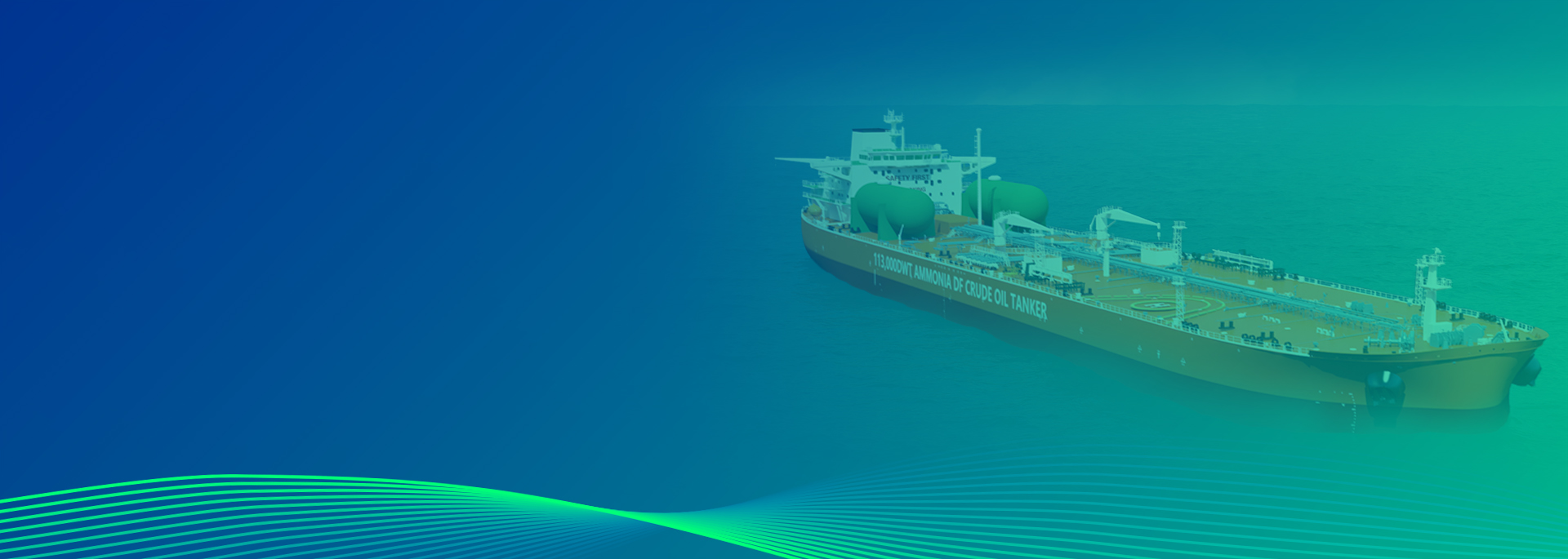
That groundwork is now moving into reality. Through AET, MISC has commissioned two ammonia dual-fuel Aframax tankers, chartered to PTLCL (PETCO Trading Labuan), with deliveries expected between 2027 and 2028. (Riviera Maritime Media, 2023)

MISC’s role: From Vessels to Value Chain
Ammonia’s promise is matched by its challenges. Its toxicity demands new safety routines at sea, and the cost remains higher than that of conventional fuels.
“The New Energy & Decarbonisation team, formed more than two years ago, was tasked to look at the broader ammonia value chain. While we remain fuel agnostic, ammonia stood out as the fuel of the future, with minimal emissions when green, and potential across shipping and even onshore industries.” — Christopher Toh, Head Business Development & Ventures, New Energy & Decarbonisation
MISC is partnering with Akademi Laut Malaysia (ALAM) to build seafarer capabilities for ammonia vessels and formalise the policies and procedures required for safe operations, reflecting ammonia’s known toxicity.
At the same time, MISC remains disciplined midstream, moving the molecule safely and reliably, while upstream production is advanced by PETRONAS and GENTARI under a strategic collaboration focused on clean ammonia and its movement to the market. (The Edge Malaysia, 2023)
What Comes Next
Low-carbon ammonia is promising, but there are constraints around scalability and infrastructure development. MISC’s first ammonia-capable vessels are timed to meet maturing engine technology and scaling up on low-carbon ammonia supply. Initial operations may start on conventional fuels with a phased transition to low-carbon ammonia as availability scales and safety protocols bed in.
“Ammonia is not without constraints, but it is not entirely new. Lessons from agriculture and industry give us a foundation.” — Wan Irfan Rinezry, Head Innovation & Project Delivery, New Energy & Decarbonisation
But MISC remains clear-eyed about the road ahead.
“Our role is to move decisively, responsibly, and collaboratively so the industry can scale it with confidence.” — Ron Wood, Head of New Energy & Decarbonisation
The course is set. With IMO rules tightening and customers demanding cleaner logistics, ammonia is poised to become a long-term marine fuel in the coming decade. For MISC, the task ahead is to prove the engines, refine shipboard routines, upskill crews, and deliver vessels ready for the clean fuel era.
Discover more about our transition journey: https://www.miscgroup.com/our-solutions
- End -
This article was written based on these references:
-
Petronas unit Gentari partners IHI Corp to produce green ammonia from renewables. (2023, March 10). The Edge Malaysia. https://theedgemalaysia.com/article/petronas-unit-gentari-partners-ihi-corp-produce-green-ammonia-renewables
-
Riviera Maritime Media. (2023, July 4). AET signs shipbuilding contracts for two ammonia-powered Aframax tankers. https://www.rivieramm.com/news-content-hub/news-content-hub/aet-signs-shipbuilding-contracts-for-two-ammonia-powered-aframax-tankers-80470
-
S&P Global Commodity Insights. (2025). Ammonia outlook: August 2025. Fertecon.